When Mark in Tucson noticed his front yard turning straw-colored in late July, he blamed the heat — until his neighbor’s lawn, shaded and watered different, stayed green. Mark has a small, sloped yard with compacted clay soil and an old sprinkler head that misted, not soaked. He needed a plan to get roots healthy again without pouring money or water down the drain. This article walks through realistic problems homeowners face and matches each with the right deep-watering setup and tweaks to revive stressed turf.
Why consistent, deep watering works — and when it fails
Problem: Homeowners often water shallowly and frequently: 10 minutes every morning, sprinkler misting across the lawn. That encourages shallow roots that die back in heat. Clay or compacted soils make things worse by repelling quick water applications so it runs off slopes or pools.
Solution: Target the root zone so moisture reaches 4–6 inches deep for cool-season grasses and 6–8 inches for warm-season grasses. Deep, infrequent irrigation forces roots downward, creating drought resilience. For example, an established Bermuda lawn in Texas benefited after switching from daily 15-minute cycles to two 30-minute cycles per week, increasing root depth measured with a soil probe from ~2" to 6" in one season.
How much water and how often?
Think in inches rather than minutes. Most lawns need about 1 to 1.25 inches of water per week in active growing seasons; during hot summer stress you might need up to 1.5 inches. Use a rain gauge or cups to measure. According to EPA WaterSense, smart controllers and efficient practices can save substantial water — smart timers alone can reduce outdoor water use by a noticeable percentage when programmed correctly (EPA WaterSense).
Match the right irrigation setup to your lawn’s challenge
Problem: One-size-fits-all sprinklers keep failing on different yards. Small, mobile sprinklers saturate compacted spots but don’t scale. Fixed spray heads create runoff on slopes. Drip or low-angle rotors take longer but are precise.
Solution: Choose equipment by yard size and soil type. Here’s a practical breakdown with realistic scenarios:
- Small lawn, irregular shape: Use portable oscillating or traveling sprinklers on a slow-moving cycle to soak the root zone. Example: a 20' by 30' yard got better infiltration when run twice weekly for 45 minutes instead of daily 15-minute bursts.
- Large lawn, established sprinkler system: Upgrade to a smart, weather-based controller and swap misting spray heads for rotors with matched precipitation rates to reduce runoff. A WiFi timer such as the RainPoint model lets you adjust schedules based on forecast and soil moisture sensors.
- Compacted clay or slope: Employ cycle-and-soak (shorter runs repeated with soak intervals) to prevent runoff. For guidance on setting that up, see how to revive a dry lawn with consistent, deep watering — it explains step-soak timing by soil type.
Example schedule table (warm-season turf, clay soil, moderate heat)
WeekCycle lengthRepeats per sessionDays/week1–2 (establishing deep soak)20 minutes3 cycles with 45 min soak33–8 (maintenance)30 minutes2 cycles with 1 hr soak2
Fixing specific problems: aeration, soil amendments, and timing
Problem: Many homeowners expect watering alone to fix patchiness. But compacted soil, crusting from irrigation with hard water, and thatch all block deep moisture. An overly frequent schedule hides these issues.
Solution: Combine mechanical and cultural fixes with deep watering:
- Aerate when soil is compacted — core aeration in early fall (cool-season grasses) or late spring (warm-season grasses) opens channels for water. A 1,000 sq ft yard often benefits from 15–25 plugs removed per square foot.
- Add thin topdressing of screened compost (1/4" layer) after aeration to improve infiltration and microbial activity.
- De-thatch if the layer exceeds 1/2". Thatch can act like a sponge, preventing water from reaching roots.
- Shift watering times to early morning (pre-dawn) to reduce evaporation; but use cycle-and-soak on slopes to prevent runoff.
Concrete example: A homeowner in Ohio with 0.6" thatch switched to 2-cycle soaks and aerated in September; within two months new turf density increased 20–30% compared to a neighbor who only watered more often.
Tools and automation that make deep watering practical
Problem: Manual watering and forgetting to adjust for weather are top reasons deep-watering plans fail. Rain events, heat waves, or vacations throw off rigid schedules.
Solution: Use the right automation and simple sensors to keep your deep-watering plan honest. For a large yard, a smart in-ground system controlled by a WiFi sprinkler timer will adapt schedules based on local weather and can run precise cycle-and-soak programs. A WiFi timer from RainPoint can handle that schedule automatically and integrate with soil moisture sensors so the system skips a run after significant rain.
Practical sensor setup
Combine a soil moisture probe at the 4–6" depth in several zones for varied soils or sun exposure. Set the controller to ignore the next run until average moisture falls below the set threshold — for cool-season grass aim for 15–20% volumetric water content in the root zone. Real-world example: In a mixed-sun yard in Georgia, adding one sensor cut unnecessary watering events by 35% over two months while keeping turf green during a dry spell.
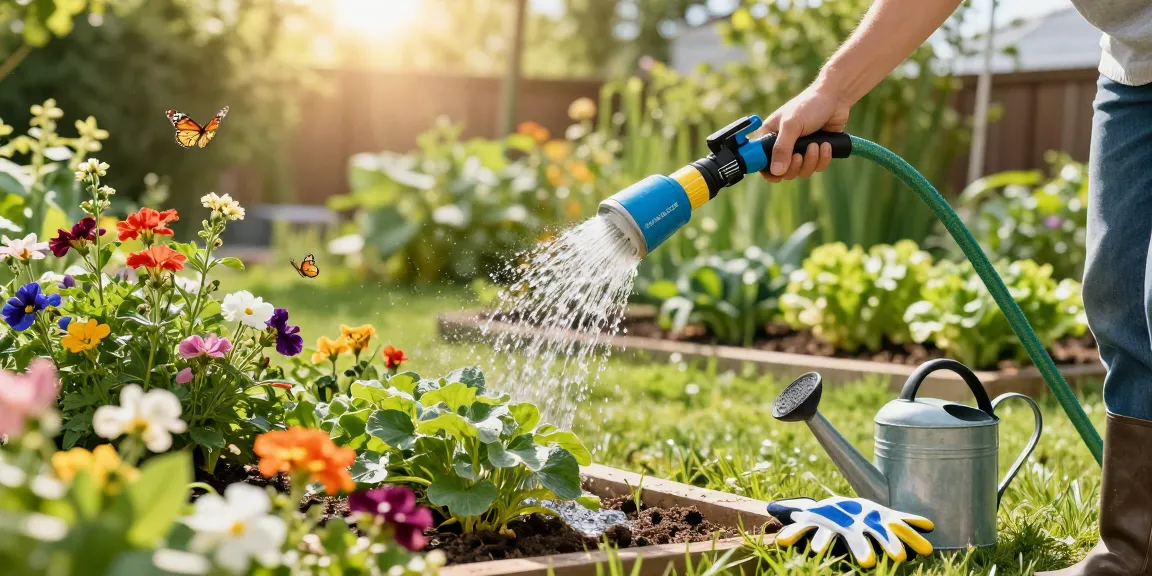
For small lawns or renters without permanent valves, mobile timers, soaker hoses, or temporary drip lines can deliver slow, deep water with minimal setup. For vegetable beds or flower borders, precision drip lines use far less water and keep foliage dry, reducing disease risk.
What to watch for after you change your approach
Problem: People switch to deep watering but panic when browning persists for a few weeks and then revert to shallow routines. Lawns need time — and seasonal timing matters.
Solution: Track progress with simple checks: pull a screwdriver or soil probe into the turf after watering to feel how deep moisture goes. Expect visible recovery in 3–8 weeks for many warm-season grasses when root depth increases. For cool-season grasses, recovery may be slower; avoid overseeding until the root system shows consistent moisture at depth. Also watch for overwatering signs: spongy feel, increased weed or fungus outbreaks. If those appear, reduce frequency or inspect irrigation uniformity.
Concrete monitoring tip: Mark a 1' square area and record turf color, density, and soil probe depth weekly; a homeowner in Colorado recorded a steady improvement in color and probe depth every week after switching to two deep weekly sessions and aerating once.
When you match the right method — tools, timing, and soil care — even a lawn that looks resigned to summer dormancy can rebuild root depth and rebound. Practical adjustments like cycle-and-soak, soil sensors, and the correct controller type make that repeatable. If you want to follow an exact cycle-and-soak plan tailored to soil type, see how to revive a dry lawn with consistent, deep watering for step-by-step timings and examples.